Keep paid lessons off pirate sites
A cloned sales page is the other place a paid video shows up.
You sell a course, then a module shows up on a pirate site or inside an offer page you never published.
The short answer
Use studio DRM when the lesson file is what people paid for. When the leak is a stolen embed or a casual capture of the screen, stack a domain allowlist, a signed player, and a watermark that names the viewer.
We read each host's security pages and pricing pages. Live campaigns sit outside this research. The methodology page explains how that reading is done.
Three locks worth paying for
A secure video hosting platform relies on three locks. Each one closes a different way out.
The first lock is a license key for that viewing session, issued through Google Widevine and Apple FairPlay.
The second lock is anti-download plus a watermark. Extensions that try to save the file are blocked, and the picture can carry the viewer's data so a leaked copy points back at an account.
The third lock is a domain list or a signed embed. Playback works on a domain you have approved, or when the iframe carries a token your server signed.
Teachable's security overview says it is impossible to completely stop content theft, sharing, and piracy. These locks make a casual copy harder. Someone can still record the monitor and keep the file.
Video hosting with DRM: a license on every lesson
Course video that needs studio keys comes in two forms: a DRM host you turn on, or a developer CDN you connect to your own login.
VdoCipher
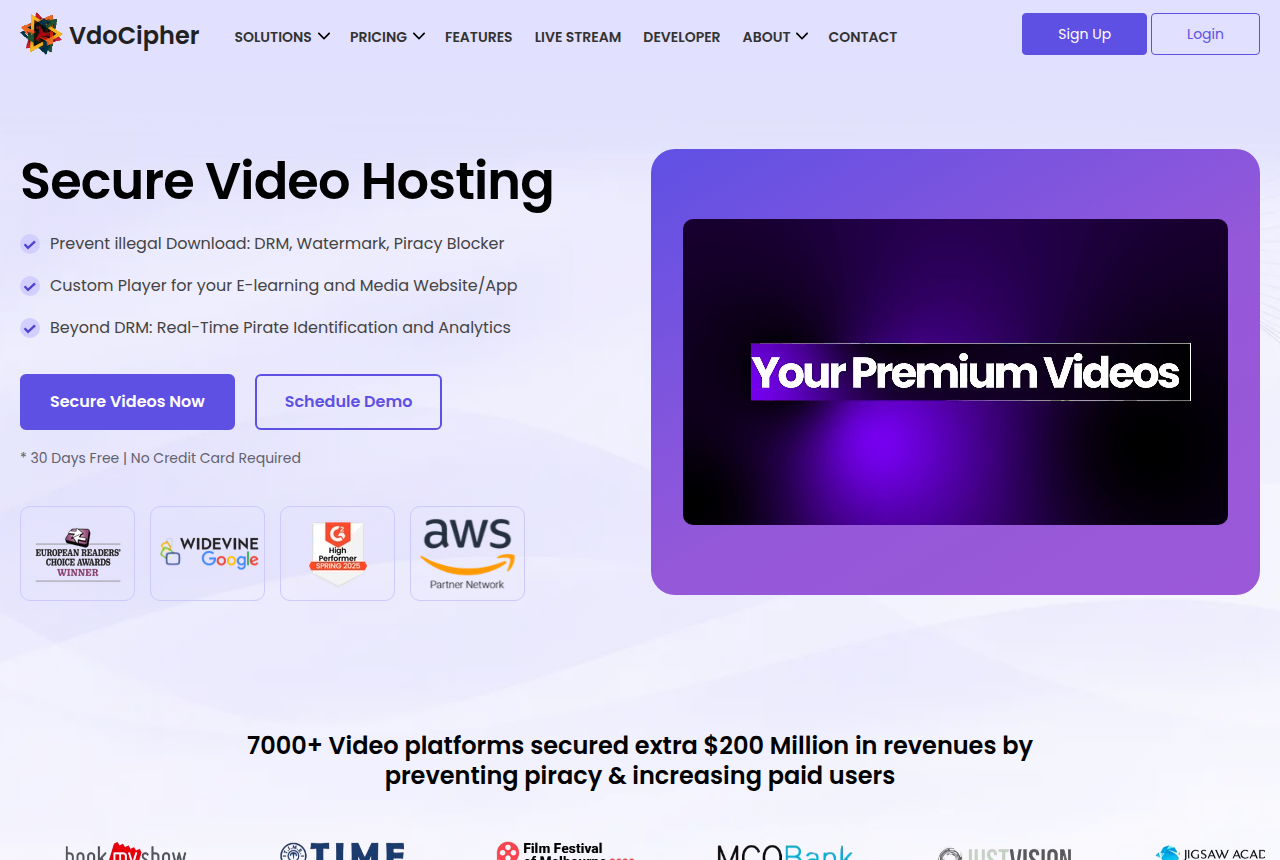
VdoCipher's homepage includes Google Widevine and Apple FairPlay in its secure hosting. Downloads are stopped on major browsers and apps. Screen recording is prevented in mobile apps and in Safari.
The same page says a license key is only part of the job, and that the host detects breaches, shared passwords, and piracy attempts.
The pricing page offers a 30-day trial with up to 4 videos and 5 GB of bandwidth, without a credit card. Its alternatives article lists Starter at $149 a year for 1,000 GB of bandwidth and 100 GB of storage.
Bunny Stream
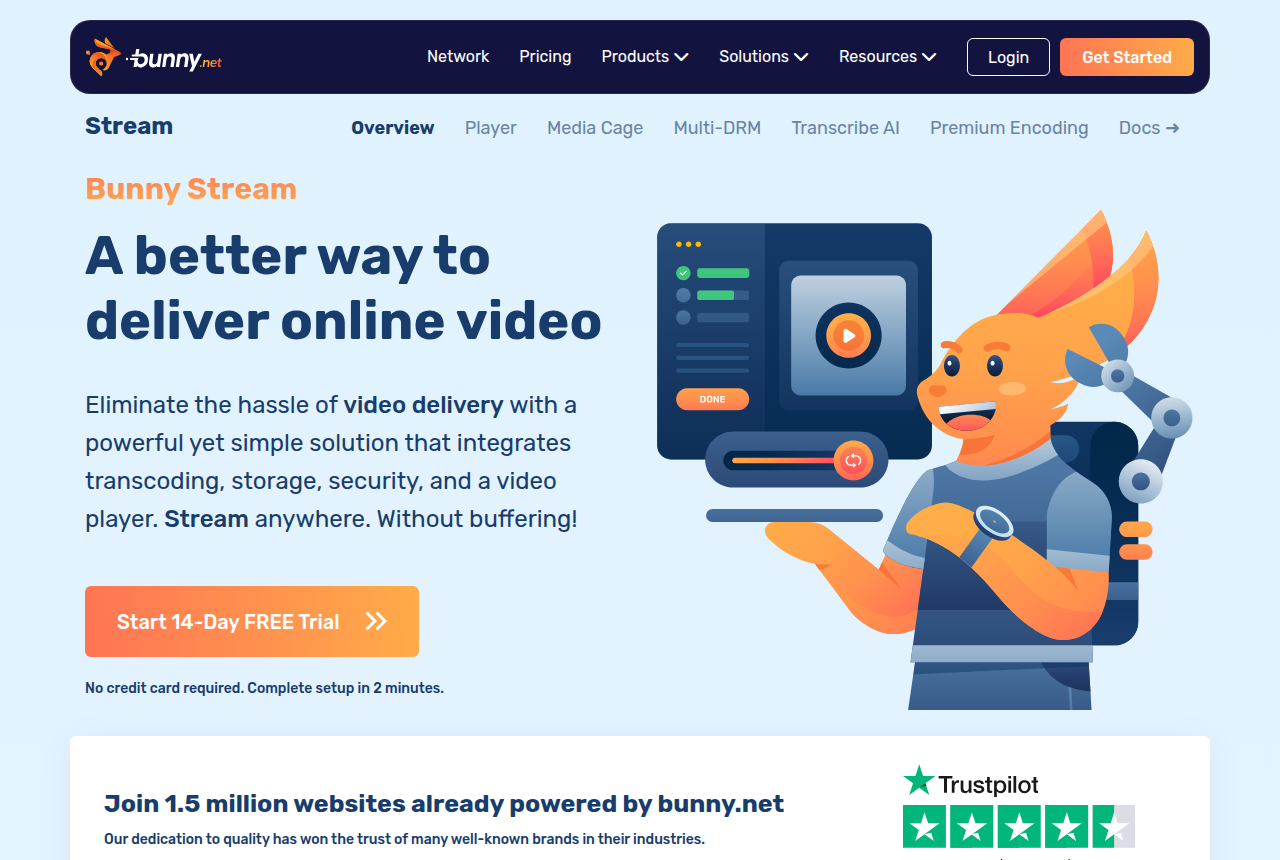
Bunny Stream describes an enterprise multi-DRM system meant to stop downloads, screen recording, and screenshots. The security docs say an embed view token signs the iframe. With Media Cage turned on, that signature also covers the DRM license endpoint.
Encoding, the player, and the security features are included in the usage price: storage from $0.01 per GB and delivery from $0.005 per GB, with a $1 monthly minimum.
The course site decides which logged-in student receives a token. Bunny's docs cover the signature. You build the gate that sits in front of it.
Vimeo lists studio DRM as an add-on with the Enterprise plan. Panda Video vs Vimeo and the Vimeo review compare that add-on with a host sold on a creator plan.
Anti-piracy video hosting: a name on the leak
Anti-piracy video hosting is what you add when a full license server is more than the course needs, or when you want a second line behind the license. It blocks a casual download and stamps the viewer's identity on the video.
Panda Video
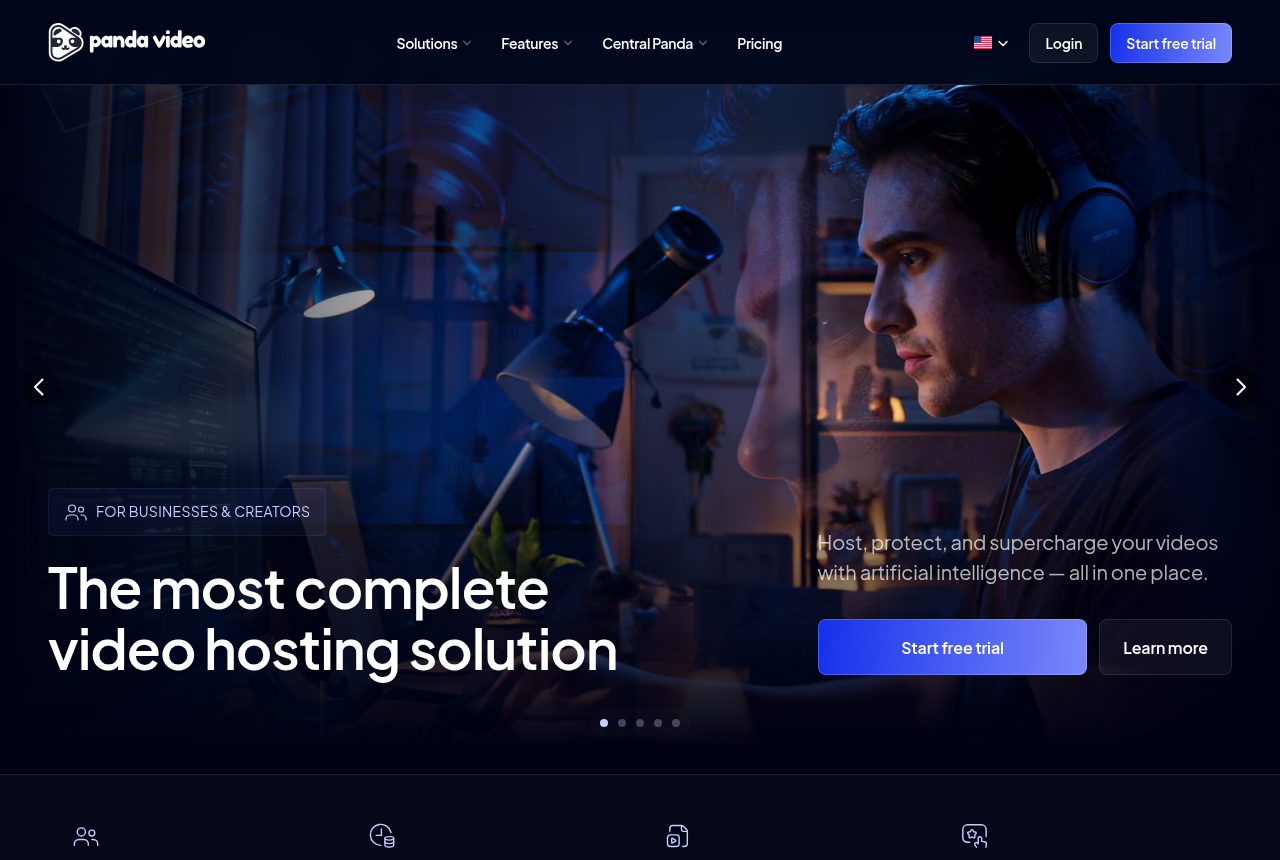
Panda's DRM watermark page says the regular watermark is free on every plan. The page says DRM does not stop a person who records the screen. The watermark shows user data so a leak can be matched to an account. The advanced level embeds a mark that remains after a download, at US$0.60 per GB of bandwidth consumed.
Anti-Download blocks download extensions. Bronze is $17.90 a month, with 200 GB of storage and 500 GB of bandwidth.
Adilo

Adilo's Unified Video Security is a dashboard add-on. It bundles multi-DRM, dynamic watermarking, viewer authentication, IP licensing, geoblocking, and links that expire. The page describes that bundle for online courses and for internal company video.
Gumlet
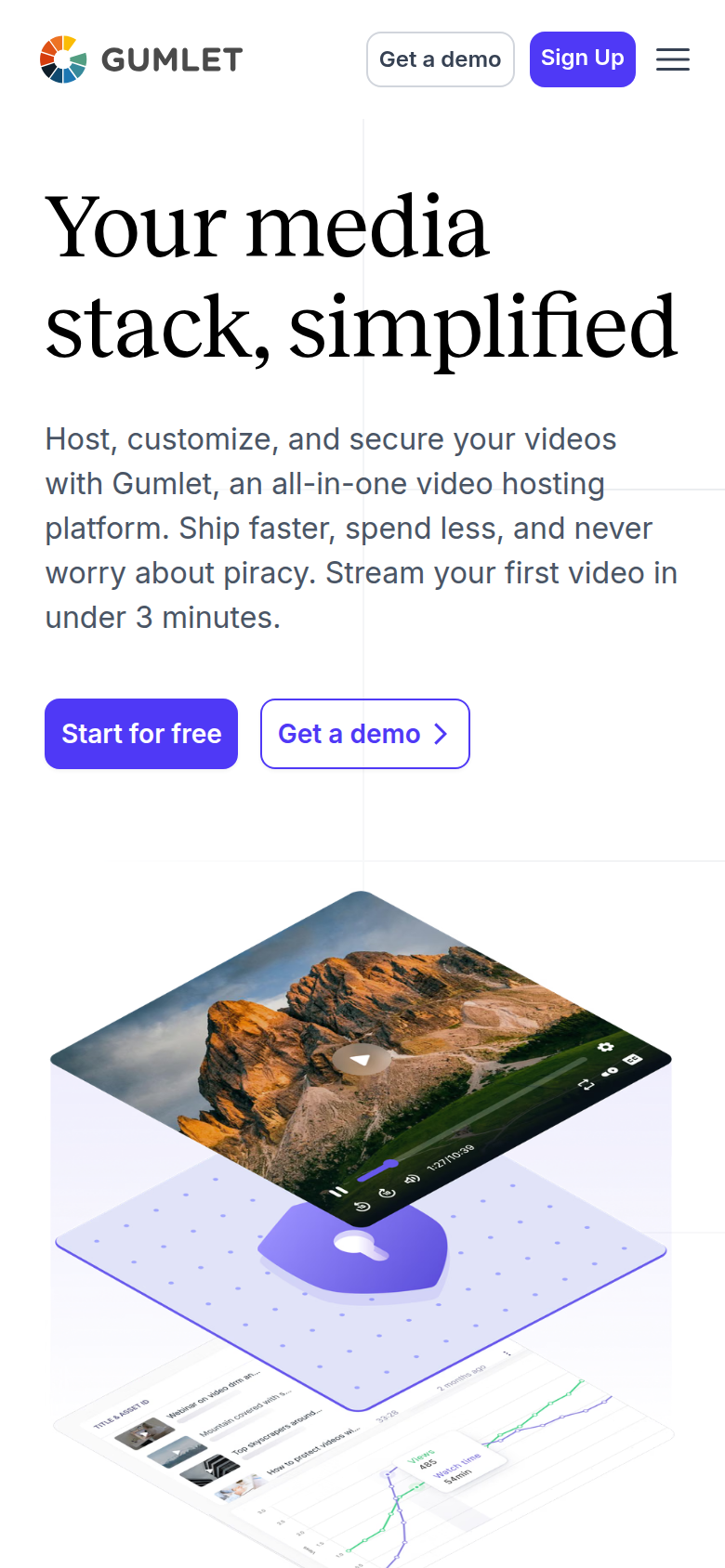
Gumlet's pricing page sells Widevine and FairPlay as an add-on at $99 a month, with 100,000 views included and $1 per 1,000 views after that. Creator is $6 a month on annual billing, with 3,000 GB of streaming and domain restriction on paid annual plans.
Domain-locked video hosting
Domain-locked video hosting stops a stolen embed, the iframe someone pastes onto a fake offer.
Panda Allowed Domains is where you list the domains and subdomains that may play a video, including a membership area. Panda says to run that list together with Anti-Download and the watermark.
Gumlet's annual Creator plan includes the same kind of site limit. Adilo's add-on includes domain-level privacy, so playback stays on the sites you allow.
Bunny's signed iframe is the token version of that control. The license endpoint expects the signature before it issues a key.
What still leaks
A desktop capture still produces a copy of the video. Panda's FAQ says the mark identifies the account after the leak.
VdoCipher limits that prevention to mobile apps and Safari. Desktop Chrome and Firefox fall outside that claim.
Teachable's overview, linked with the three locks, puts the same ceiling on a course platform. In an r/elearning thread on Teachable piracy, creators say a screen recorder still copies a lesson when the platform protections are on.
VdoCipher's homepage says the host can detect password sharing, which is how a shared student login shows up after the fact.
VdoCipher's trial covers four videos. That is enough to put one module behind a license before the rest of the library moves.
Match the host to the job
A lesson library, the video that sells the seat, and an internal training file are three different jobs.
For a lesson library, VdoCipher is the host when every module needs a license key. Panda Video is the host when you want the watermark, Anti-Download, and Allowed Domains on a creator plan.
Bunny Stream fits a team that signs the embed token and runs student access in its own app.
The pitch that sells the course is a different file from the lessons. Panda's allowlist can cover the sales page and the membership area, as long as both domains are on it. The video sales letter guide covers that pitch. The cheap hosting guide compares bandwidth, plays, and minutes. The agency guide is for keeping each client's funnels separate.
Gumlet costs less to start. Add its DRM when a module needs a license.
Adilo fits courses and internal company videos when multi-DRM, a dynamic watermark, and viewer authentication need to be on at once. The add-on lives in the dashboard.
My take
I'd start with a domain allowlist and a watermark on the host the lessons already use. I'd move a high-ticket module onto studio keys when that same lesson keeps appearing outside the course.
I'd judge a homepage line about blocking capture against Panda's FAQ and against VdoCipher's split between mobile apps, Safari, and other desktops. Those two documents are narrower than a blanket block, and the FAQ is the one I trust.
Price the host for your own length and traffic before you move a library.
Questions people ask before they switch
Can a student still record a lesson?
Someone recording the monitor still gets a file. The watermark is how you later see whose login was on screen. VdoCipher's block covers mobile apps and Safari.
Do I need DRM if the lessons already sit on Teachable?
A course login and a license on the file are different layers. Teachable's own overview says a total stop is out of reach. The license matters once the file lives on a host that issues one.
What is domain-locked hosting?
The video plays only on domains you list. It also plays when the embed carries a token you signed. If the iframe is pasted onto a site outside that list, the player never receives a key.
Does a pitch video need the same locks?
The pitch usually leaks as an embed on a fake offer, so the allowlist comes first. The lesson file needs the license. Use the sales-letter guide for the format, and the calculator to price the host.
Related reading
Sources
- Panda Video: DRM watermark
- Panda Video: Anti-Download
- Panda Video: Allowed Domains
- Panda Video: pricing
- VdoCipher
- VdoCipher: pricing
- VdoCipher: alternatives article (Starter plan)
- Bunny Stream
- Bunny Stream: security docs
- Gumlet: pricing
- Adilo: Unified Video Security
- Vimeo help: DRM
- Teachable: security overview
- r/elearning: piracy on Teachable
Changes to this page
- 15 October 2026: first published, from vendor security pages, pricing pages, Teachable's security overview, and a course-creator thread on piracy.

Written by
Mara Vance
Editor
Mara edits the reviews and roundups on VSL Host Report. She checks autoplay, watch time, timed buttons, lead gates and page speed when the visitor is new and the traffic is paid. She also maps what each host really costs, whether it bills per play, per gigabyte or per seat, and rebuilds the monthly bill for a typical VSL funnel. For each piece she reads long-term user reports across forums and review sites, works through the vendor's own docs and pricing, and confirms the numbers before a verdict goes live.
Last checked 2026-10-15
Comments
No comments yet. Questions and your own experience are welcome.
Thank you. Your comment will appear once it has been reviewed.