Cheap video hosting for a VSL: pick the meter first
The lowest bill depends on whether the host counts gigabytes, plays or minutes, and on how much of the video people actually watch.
You want the smallest invoice for a single pitch on paid traffic, and these hosts charge on different meters. One counts gigabytes delivered, one counts a play, and one counts minutes streamed.
The short answer
Estimate minutes watched before you compare logos. Light traffic is often cheaper on Mux's free delivery minutes or Bunny's per-gigabyte rate, while a long video that people sit through can be cheaper on Voomly's unlimited plans or on a play allowance from TrackPlay or Vidalytics.
We read each vendor's pricing page and long-term user reports. We do not run the tools or their invoices. How we evaluate video hosts is the longer version of that method.
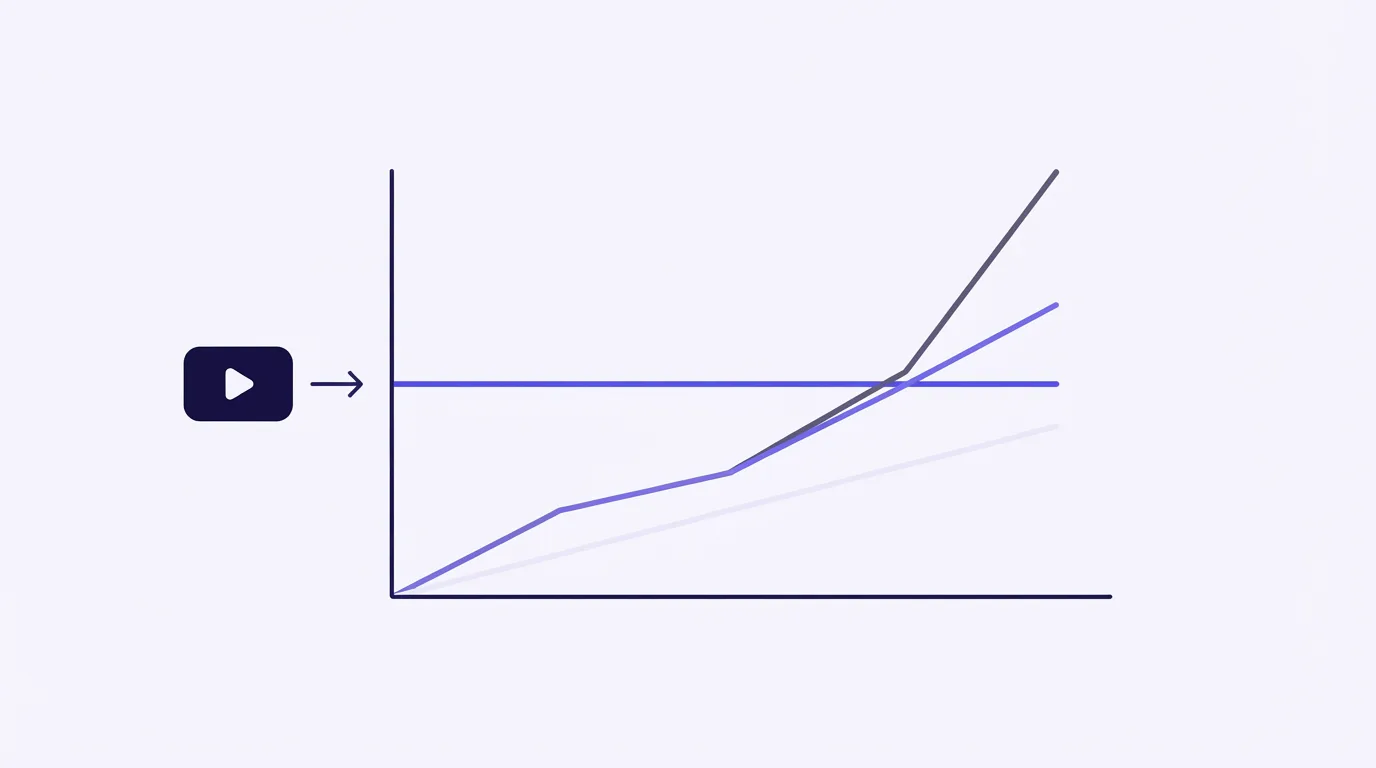
Three pricing models that change your bill
Bandwidth hosting bills the bytes that leave the network. Every second streamed, at whatever bitrate the player sends, adds to the total, and a rewatch adds it again. Wistia, Panda Video, Gumlet, Bunny Stream and Vimeo all publish a bandwidth figure, either as a rate or as a monthly cap.
Play hosting bills a session. TrackPlay's pricing page says a silent start that nobody unmutes is not a play, and the free plan pauses at its cap with no overage charge. Vidalytics sells a monthly play allowance and then an extra-play rate. The two pages do not use the same session rules, so a "play" on one is not automatically a play on the other.
Minute hosting bills duration. Cloudflare Stream charges for minutes delivered and, separately, for minutes stored. Mux's free tier is also a pile of delivery minutes. The file's weight matters less than how long it runs and how much of it is sent.
| Meter | What raises the bill | Who publishes it |
|---|---|---|
| Bandwidth | Seconds watched and rewatches, at the stream bitrate | Wistia, Panda, Gumlet, Bunny, Vimeo |
| Plays | Sessions that meet that vendor's own rules | TrackPlay, Vidalytics |
| Minutes | Duration delivered, plus duration stored | Cloudflare Stream, Mux |
Estimate viewing before you compare plans
Monthly minutes delivered are roughly the video's length in minutes, times landing-page visitors, times the fraction they watch. A 20-minute video with 5,000 visitors who watch a quarter of it is 25,000 minutes. The VSL hosting cost calculator uses that quarter-watched share in its worked example, and you can change the inputs.
A 45-minute sales video punishes a per-gigabyte host once people stay. A play is one session. A gigabyte is every second that streams, including the second pass. Finishers on a long video move far more data than the same headcount of visitors who leave in the first minute, so the bandwidth invoice climbs while a play allowance does not move with watch time.
Put your length, your visitors and your own watch share into the calculator, and read the plan cards on this page as the list rates behind the choice. If you are still writing the pitch, the explainer of what a VSL is and the timed script sit upstream of this decision.
Affordable video hosting while traffic is small
These four are the affordable end of raw delivery. None of them includes a sales player. Timed buttons, sound-first autoplay and a pixel on the sale are work you or a developer add. Prices below were read on each vendor's pricing page.
Mux

100,000 delivery minutes a month on the free tier, then usage rates.
A test funnel that is still inside that free pool, if you will build the player yourself.
Bunny Stream
$0.010 per GB on the standard CDN in Europe and North America, plus a $1 monthly minimum. The volume network starts at $0.005 per GB.
Raw delivery for a small test, once someone can embed the stream.
Gumlet
$6 a month on annual billing, with 3,000 GB of streaming included and $0.15 per GB after that.
A bundled allowance that covers a modest sales video until the 3,000 GB line.
Cloudflare Stream
$1 per 1,000 minutes delivered, and $5 per 1,000 minutes stored. Encoding and ingress are free.
A long file billed by duration, which stays smaller when few people watch it through.
For a first funnel with a few thousand visits, I would start on the free minute pool or the per-gigabyte rate and accept the build. The moment the page needs a button at the offer and a chart of who left, this group stops being the cheap option, because the missing player is a project.
Mux's allowance is on its pricing page. Bunny's regional rates and the monthly minimum are in the Stream pricing docs. Gumlet's Creator bundle is on Gumlet pricing, and Cloudflare's two minute rates are in the Stream pricing documentation.
When a flat tier beats per-gigabyte math
A course launch sends buyers back through the same files, and every rewatch is more gigabytes. A cold-traffic pitch is usually a single pass, and many of those passes are short. Unlimited bandwidth is priced for the first pattern. A tight gigabyte allowance is priced for the second, until the launch overshoots it.

Voomly

Plus is $19 a month, or $16 a month billed annually, with unlimited bandwidth and 2 TB of storage. Basic is $9 a month and stops at 20 GB.
A flat bill when the same buyers rewatch, as on a course launch.
Panda Video

Bronze is $17.90 a month with 500 GB of bandwidth, then $0.03 per extra GB.
A fixed monthly allowance for one launch that stays inside 500 GB.
Voomly's pricing page lists unlimited bandwidth on Plus, Cloud and Pro. Light and Basic stay capped, which is why the cheap entry plan is a different product from the unlimited ones. Panda's pricing page is the source for the Bronze allowance and the extra-gigabyte rate. Read the Voomly review and the Panda Video review for what each player does beyond the meter.
Play-based pricing for conversion players
Older roundups still describe Vidalytics as a bandwidth host. Its current pricing page meters plays, the same family of bill as TrackPlay, with its own allowances. Compare the two on those allowances. Feature lists belong on the reviews.
Play billing helps when watch time is high, because a finisher and a bounce can share one session charge. It gets expensive when the vendor bills visitors who never really start. TrackPlay keeps a muted autoplay that nobody unmutes off the invoice, which is the cold-traffic bounce. Vidalytics publishes its own allowance and extra-play rate. Keep TrackPlay's muted-autoplay rule on TrackPlay alone.
TrackPlay
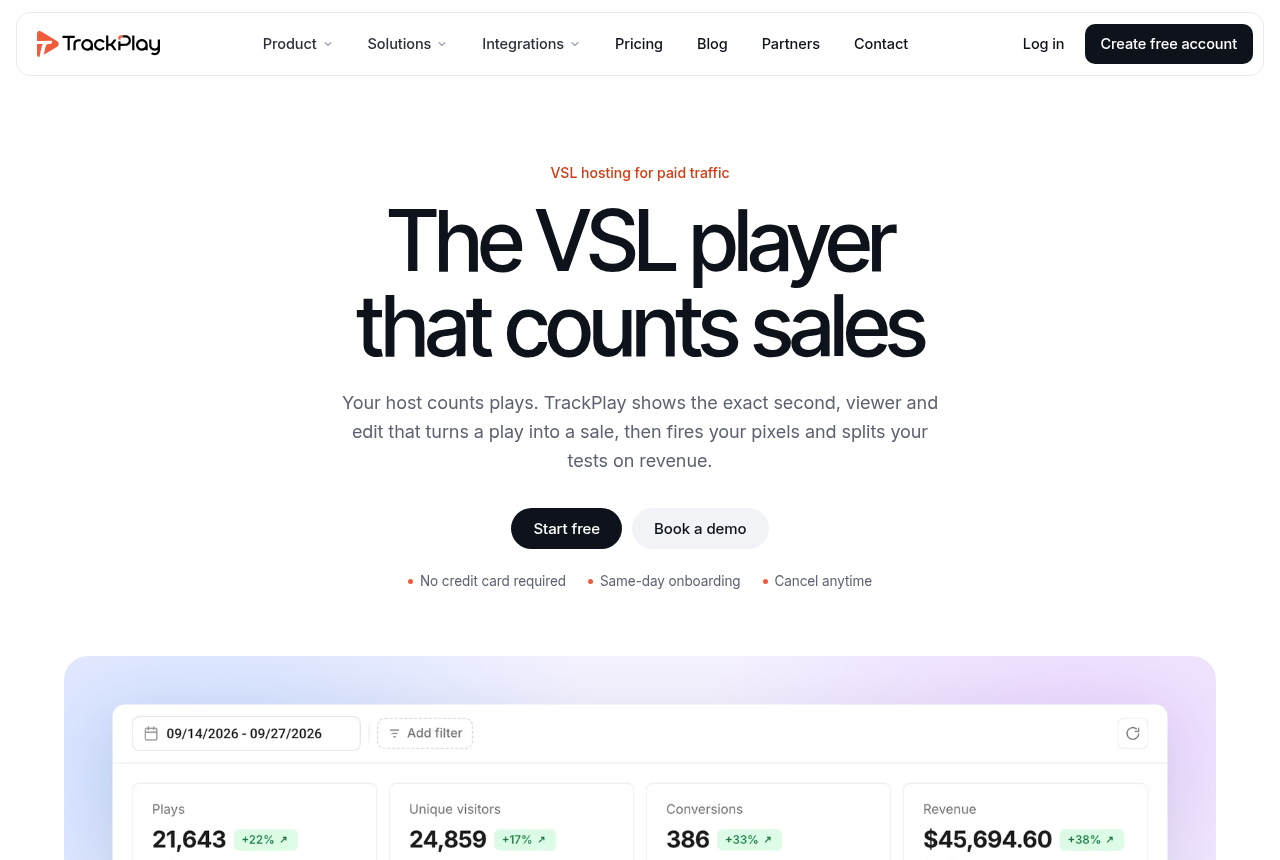
Paid plans start at $29 a month for 5,000 plays. Pro is $79 for 15,000 plays, Scale is $199 for 50,000, and extra plays are $0.02 on the $29 plan or $0.01 above it.
A conversion player for paid-traffic pitches, metered by the play.
Vidalytics
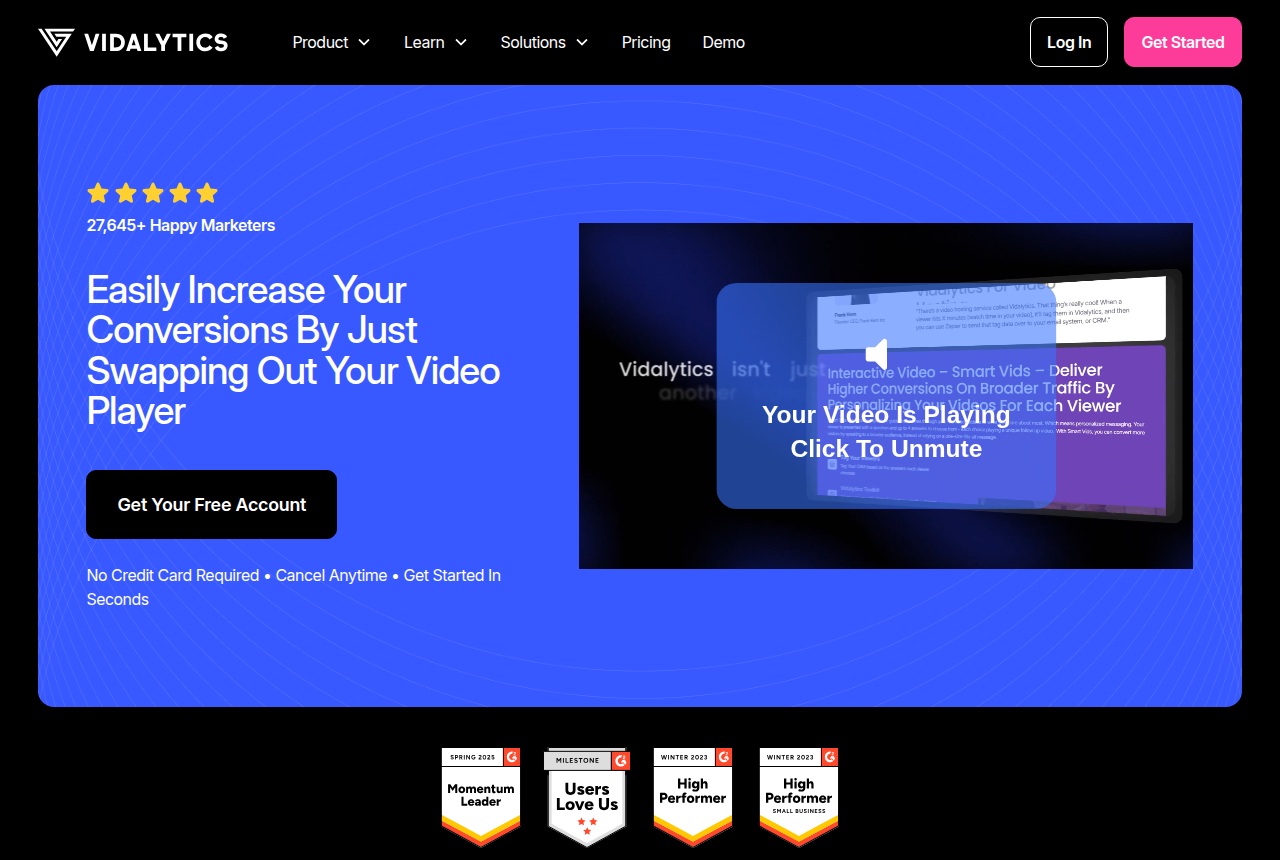
Free includes 1,000 plays a month. Starter includes 2,000 a month or 24,000 a year, Pro 5,000 or 60,000, Premium 15,000 or 180,000. Extra plays on paid tiers are $0.02 each.
A conversion player whose 2026 pricing page sells a monthly play allowance.
TrackPlay is the play-metered host to open when the job is a paid-traffic sales video and the sale has to be tied back to the play. Channel pages, SEO pages and webinar tooling are the part it leaves out, which matters when the video's job is a content library. The player and the play meter still apply to the sales video. It is also very new, with little third-party review yet, which is what you would expect before a platform has a public track record. The TrackPlay review and the Vidalytics review go into the players. Allowances here are from TrackPlay pricing and Vidalytics pricing.
Bandwidth caps on general hosts
Wistia and Vimeo are the hosts people already know, and both publish bandwidth as a ceiling rather than as a per-gigabyte rate. A library of marketing videos can live inside that ceiling for a long time. A pitch on paid traffic spends it as watch time, the same way any other embed does, and the ceiling arrives sooner when the video is long.
Wistia

Business is $79 a month on annual billing and includes 1 TB of bandwidth. The free plan includes 200 GB.
A business host whose public plan table is a bandwidth row.
Vimeo
Self-serve paid plans include 2 TB a month. Embeddable video on the free plan is capped at 1 TB a month. Vimeo may contact an account that exceeds 2 TB in at least two months of a year, or 10 TB once.
A general host with a published monthly ceiling and a follow-up when that ceiling repeats.
Vimeo's plan article is the source for the monthly ceiling, and its bandwidth article says it may contact accounts that cross the line at least twice in 12 months, or once at the higher mark, to discuss a custom plan or a move. That follow-up is the pressure sellers describe once embed traffic repeats. Wistia's bandwidth row is on its pricing page. The Wistia review and the Vimeo review cover where a general host still fits.
What to check before you pay
A video hosting pricing comparison that lines up monthly fees and ignores the meter will pick the wrong cheap host. On the checkout page, read these five things:
- Whether the allowance is gigabytes, plays or minutes, and what happens to a rewatch.
- The rate after the allowance, and whether delivery is billed in arrears.
- Whether silent autoplay counts. On bandwidth and on minutes, the bytes or the duration can count even when nobody turns sound on.
- Whether playback stops at the cap or keeps going and bills you.
- Whether retention charts and ad pixels are on the plan in the cart or on a higher one.
Bandwidth-based video hosting looks cheapest on a rate card of a cent per gigabyte. It stays cheap only while minutes watched stay small. Once you have the fraction you expect people to watch, which host costs less can flip without any of them changing their price.
The wider ranking, judged on the player as well as the bill, is the best video hosting for VSLs.
My take
I would start with the calculator and the minutes I think viewers will sit through, and I would not crown a winner from the logo. I would take an infrastructure host only if I am ready to build the player layer, and a conversion player when the retention chart and the pixel matter more than the last dollar of delivery.
Which meter costs less follows that viewing estimate.
Related reading
Changes to this page
- 13 October 2026: first published, from vendor pricing pages read in October 2026.

Written by
Mara Vance
Editor
Mara edits the reviews and roundups on VSL Host Report. She looks at how a video player behaves on cold paid traffic: autoplay and unmute behaviour, per-second retention, timed CTAs, lead gates and load speed. She also maps what each host really costs, whether it bills per play, per gigabyte or per seat, and rebuilds the monthly bill for a typical VSL funnel. For each piece she reads long-term user reports across forums and review sites, works through the vendor's own docs and pricing, and confirms the numbers before a verdict goes live.
Last checked 2026-10-14