How video load speed changes landing page conversion and ad cost
The sales video has to start on the click you paid for, and the embed is what makes the speed report go red.
- When video slows the page
- What the player adds
- Lazy load and facades
- Lab scores and the visit
- Ad cost
- What to fix first
You paid for the click. The sales video has to start on its own, and the speed report went red as soon as the player was on the page.
The short answer
Yes. A heavy player or an iframe can delay the largest paint and tie up the main thread while it starts. Load the poster image with the page. Wait to load the full third-party player until a click, and only if the opening line can wait.

Does video slow down a landing page?
It does when the embed is a second site inside yours. ClickFunnels' performance guide says an iframe loads its own HTML, CSS and JavaScript, which adds to the time the whole page takes to load.
YouTube is the case with a published figure. web.dev's video performance guide, citing the HTTP Archive, says YouTube embeds block the main thread for more than 1.7 seconds on the median website. That is time the page cannot spend painting or answering a tap.
The title of one r/webdev thread records a standard YouTube embed taking a mobile PageSpeed score from 56 to 22 and a desktop score from 93 to 70. That pair of scores is one page's lab test. A different offer, a different theme and a different set of pixels will land somewhere else.
A page that paints quickly still has to carry an offer people stay for. The guide on what a video sales letter is covers that selling job. Other hosting questions are answered on the VSL hosting roundup.
What the player adds to the largest paint
web.dev's LCP article says sites should strive for a Largest Contentful Paint of 2.5 seconds or less, at the 75th percentile of page loads. On a sales page the video is often the element that sets that time. For a video element, the clock uses the poster image or the first frame, whichever is ready sooner.
A static hero image can set that time while the player script still blocks the main thread. The YouTube number above is that block, and it still applies when some other element is the one being measured.
When the video or its poster is the element being timed, web.dev's lazy-loading note says to leave loading="lazy" off it, the same way the largest image loads with the page. The poster attribute cannot carry a fetch priority of its own. The note's fix is to preload that poster with fetchpriority set to high.
Autoplay moves the download up. The performance guide says a video element with autoplay begins downloading immediately, even when it sits outside the opening view. That immediate download is how the player is ready when someone arrives from an ad. A lazy attribute on the same video delays the opening. The article on smart autoplay and unmute restart explains this preload.
Lazy load a video embed when the hook can wait
An iframe the visitor has not reached yet is a different case from the hero. web.dev's iframe article says lazy-loading those off-screen frames can ease bandwidth contention and improve the largest paint on a constrained network. For YouTube, the same article gives a size: lazy-loading those embeds saves around 500KB on the initial page load. That saving is the video embed page speed gain for a clip further down the page.
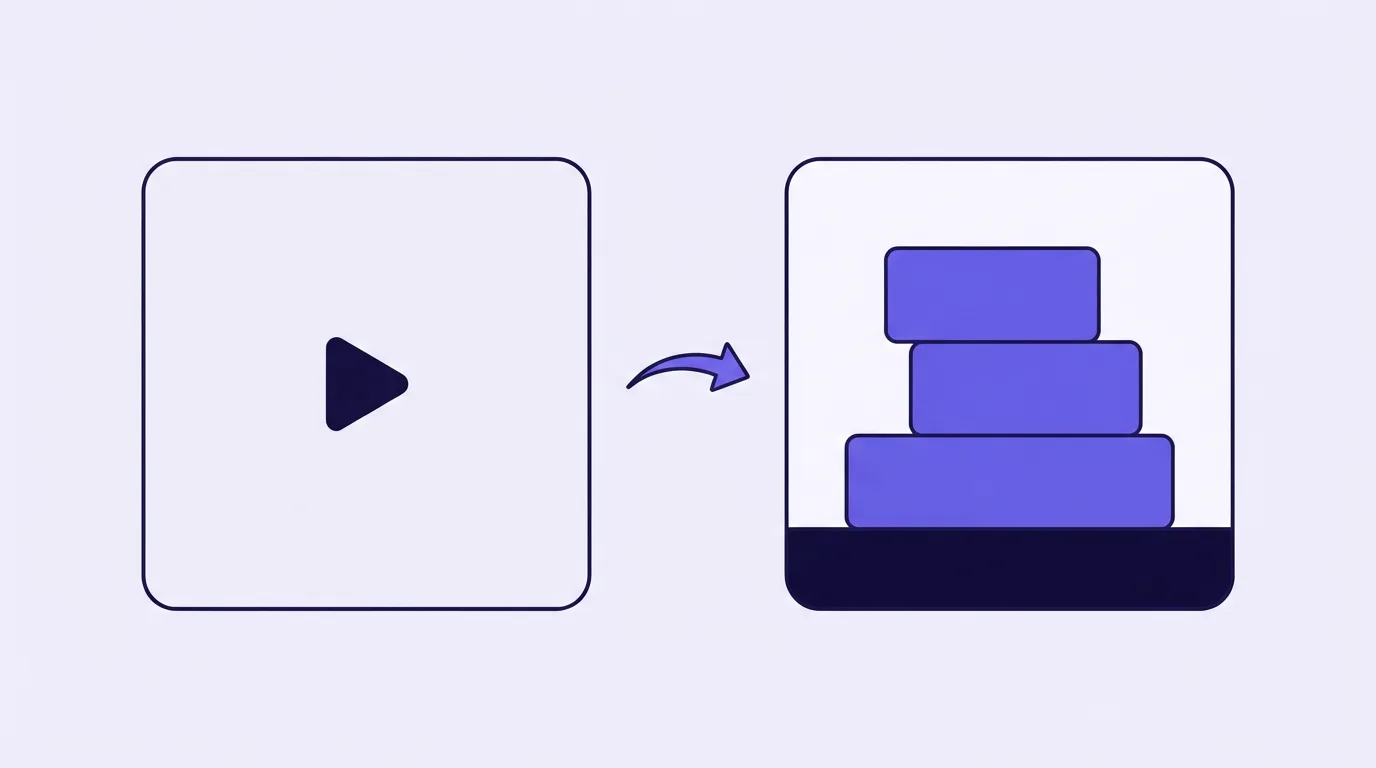
A facade does more than a loading attribute. Chrome's facade guidance defines a facade as a static element that looks like the embedded third party, is not functional, and therefore taxes the load much less. On click, the facade replaces itself with the real player. The performance guide describes the same compromise: skip the embed on the initial load, show a placeholder, and swap the player in when the visitor interacts. A top comment on that r/webdev thread says to show the thumbnail and a play button, and to leave the iframe address unset until that click.
That delay works against paid traffic, because the visitor needs to hear the opening line immediately. The autoplay download above starts with the page. A facade keeps the real player out until someone clicks, so the spoken line waits for that click.
Vidalytics' help article describes a facade that shows a static thumbnail and loads the full player when the viewer clicks. It says that pattern can improve LCP, TTI and Speed Index.
TrackPlay's features page documents a lazy click-to-load embed for pages with many videos. The product is a player for paid-traffic sales video. Channels, SEO pages and webinars sit outside that job, so a content library is a poor match. On a page with several sales videos, that click-to-load embed is the lighter option.
Bunny Stream's embedding docs show a sample iframe with loading="lazy" on the embed. That sample fits a player further down the page. The hero video loads with the page, which is why lazy-load stays off it.
Lab scores and the real visit
Vidalytics says the metric that matters in GTmetrix and Pingdom is Onload Time, and that background streaming after that has zero impact on the visitor experience. They are describing the timeline inside those lab tools. Real visits are judged against the 2.5-second threshold from the section above.
The ClickFunnels guide states a separate risk. Funnel pages that do poorly on Core Web Vitals can lose search visibility, even when other SEO work is in place. That risk is about being found. It runs on a different clock from a lab tool's onload mark.
Turning off the preload to improve a lab score also delays the video file the opening line needs.
How load speed ties to ad cost
Google Ads Help defines landing page experience as how relevant and useful the page is to the person who clicked the ad. When that rating is Below average or Average, Google tells you to improve loading speed. Page speed can be the difference between someone bouncing and someone buying.
A second Ads page says landing page speed can make the difference between converting and losing a customer, and that this rating is a factor in Quality Score and Ad Rank. Faster pages are tied to those two scores through that rating.
Wistia's landing-page guide offers two seconds as a rule of thumb for a marketing page.
What to fix before you change hosts
When the video or its poster is the element setting the paint time, preload that poster at high priority and leave lazy-load off it.
When the clip is a YouTube iframe, or any third-party player the visitor has not reached, the placeholder Chrome describes is the lighter path. The 500KB saving above is what web.dev measured for that YouTube pattern.
Host choice comes after those two. Compare players in video hosting built for landing pages and cheap video hosting for VSLs.
My take
I'd start with the poster and leave lazy-load off the hero. A click facade fits a player lower on the page, and a page with several videos. Keep the early download when the ad has to play the opening. Switching hosts can wait until the poster and the embed are handled.
If you are rebuilding the landing page for Black Friday, measure that mobile paint time again after you change the poster and the embed. Then pick the host.
We read Google's performance guides, Ads Help and the vendor pages linked below. We do not run these players on live campaigns.
Sources
- web.dev: Largest Contentful Paint
- web.dev: lazy-load video
- web.dev: video performance
- web.dev: lazy-load iframes
- Chrome: third-party facades
- Google Ads Help: relevance and usefulness
- Google Ads Help: landing page speed
- ClickFunnels: faster pages
- r/webdev: a YouTube embed and PageSpeed
- Vidalytics help: lab scores and a facade
- TrackPlay: features
- Bunny Stream: embedding
- Wistia: video on landing pages
Related reading
Changes to this page
- 23 October 2026: first published, from web.dev, Google Ads Help, and vendor embed notes.

Written by
Mara Vance
Editor
Mara edits the reviews and roundups on VSL Host Report. She checks autoplay, watch time, timed buttons, lead gates and page speed when the visitor is new and the traffic is paid. She also maps what each host really costs, whether it bills per play, per gigabyte or per seat, and rebuilds the monthly bill for a typical VSL funnel. For each piece she reads long-term user reports across forums and review sites, works through the vendor's own docs and pricing, and confirms the numbers before a verdict goes live.
Last checked 2026-10-23
Comments
No comments yet. Questions and your own experience are welcome.
Thank you. Your comment will appear once it has been reviewed.