See which opening sold, and keep your ad link
The winner has to be a number you can measure, on the embed the ads already point at.
Two openings are cut, and the ads already share one URL. Plays can rise on both while only one of them sells.
The short answer
Keep that URL. Score the test on a cart order, a recorded conversion, or plays and retention, and use the host that can see the number you trust.
We read each host's own pages on split testing. We do not run these players on live campaigns. The methodology page explains how the research is done.

What a split test VSL needs
The ads have to keep their URL, and the same viewer has to keep seeing the same version. Otherwise the learning on the ad set resets, and a person who returns can land in the other arm.
TrackPlay's features page says each visitor sticks to their version for 30 days, under the embed you already shipped.
Vidalytics' VSL guide says to change one element per test, so the result points at a single lever. Its funnel article says to try two radically different openings in the first 30 to 45 seconds, and to keep the rest of the video identical.
The timed script template is the body you leave untouched. The sales-letter guide covers what the video is doing on the page. If the body changes with the opening, the result no longer points at one lever.
Score the winner on posted orders
When the cart can send the order back, the test can settle on that order.
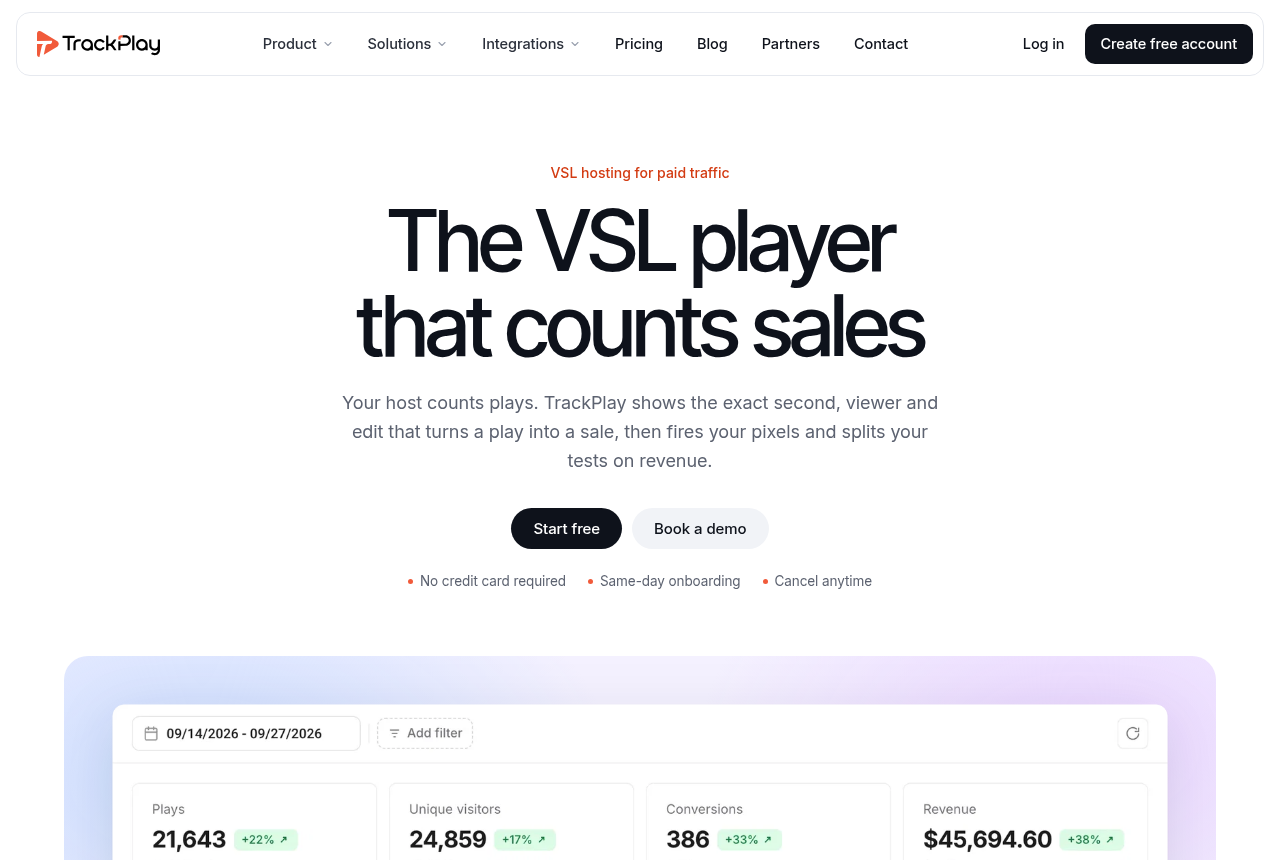
TrackPlay's split-testing page says traffic splits under one embed code. The cart posts the sale, and that sale is attributed to the variant that produced it. Plays, conversions and revenue are listed for each variant, each on its own.
The features page declares that winner with a p-value and a confidence interval.
The player is built for a paid-traffic sales video. A course library and a content-marketing channel sit outside that job. A sales video whose cart can post the order still gets the test scored on that order. It is also very new: the testimonials you can read are on its own site, and there are few third-party reviews yet. That is what you would expect from a platform this new.
TrackPlay vs Vidalytics sets a posted order next to conversion tracking.
A video A/B testing tool in the player
When you can record a conversion and the cart cannot post the order, pick one metric and let the player run the test.
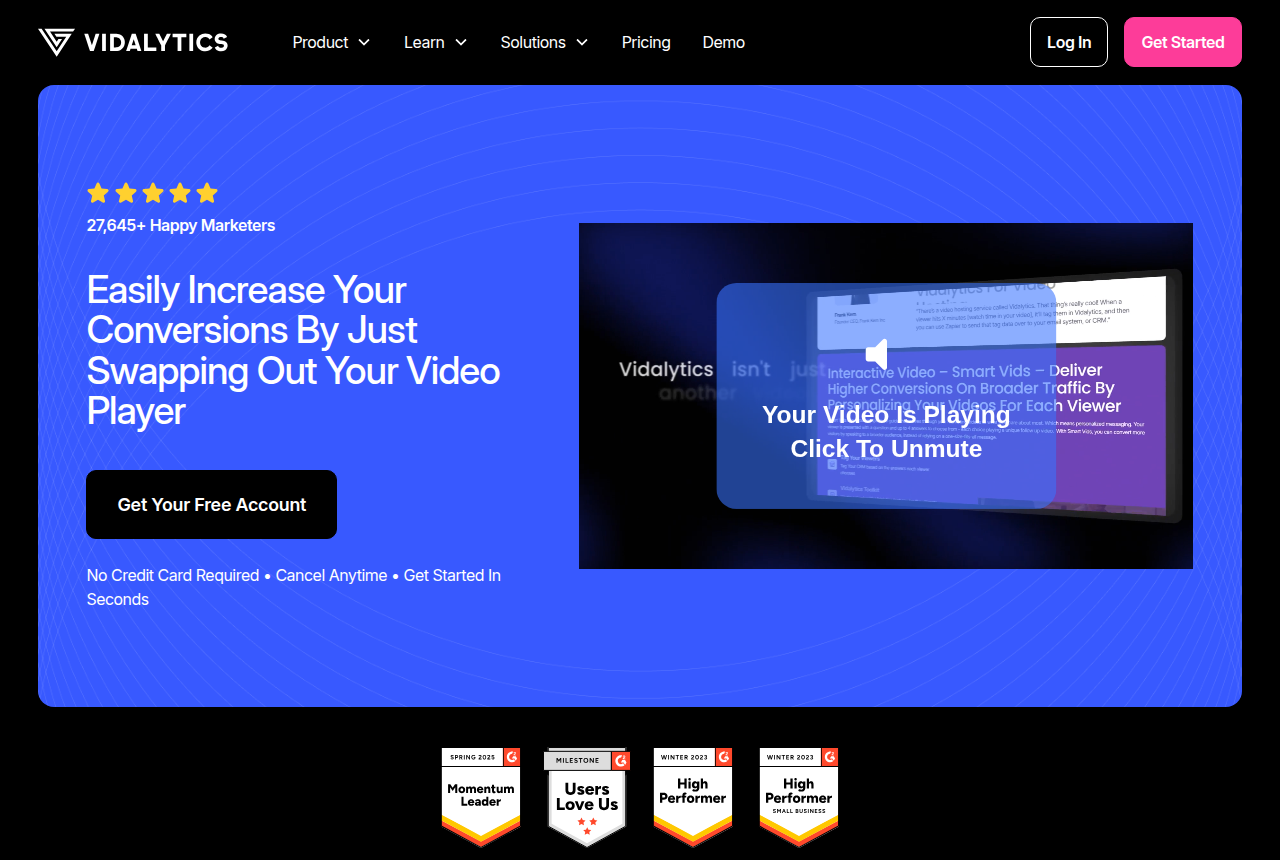
Vidalytics Experiments runs the test inside the player, on the embed already on the page. Each experiment holds two videos. The same article says the test is available on Pro plans and above.
You choose one success metric. The menu is click rate, opt-in rate, conversion rate, average percentage watched, unmute rate or bounce rate. Set it to conversion rate when that is the number you can record.
Winner Recommender uses a Bayesian model that updates as results come in. Ready to Finish is one status it can return.
Revenue on the variant is the TrackPlay figure in the section before this one. Conversion rate is the metric this experiment can be told to watch.
Plays and retention for courses and affiliates
Some stacks can count plays and how long people stayed. The winner there is an engagement result.
Panda Video
Panda's A/B page rotates versions through one embed code, so the page address stays put. It tells you to judge the versions on plays and retention. On a course or an affiliate page, that pair is the score this host publishes.
Adilo
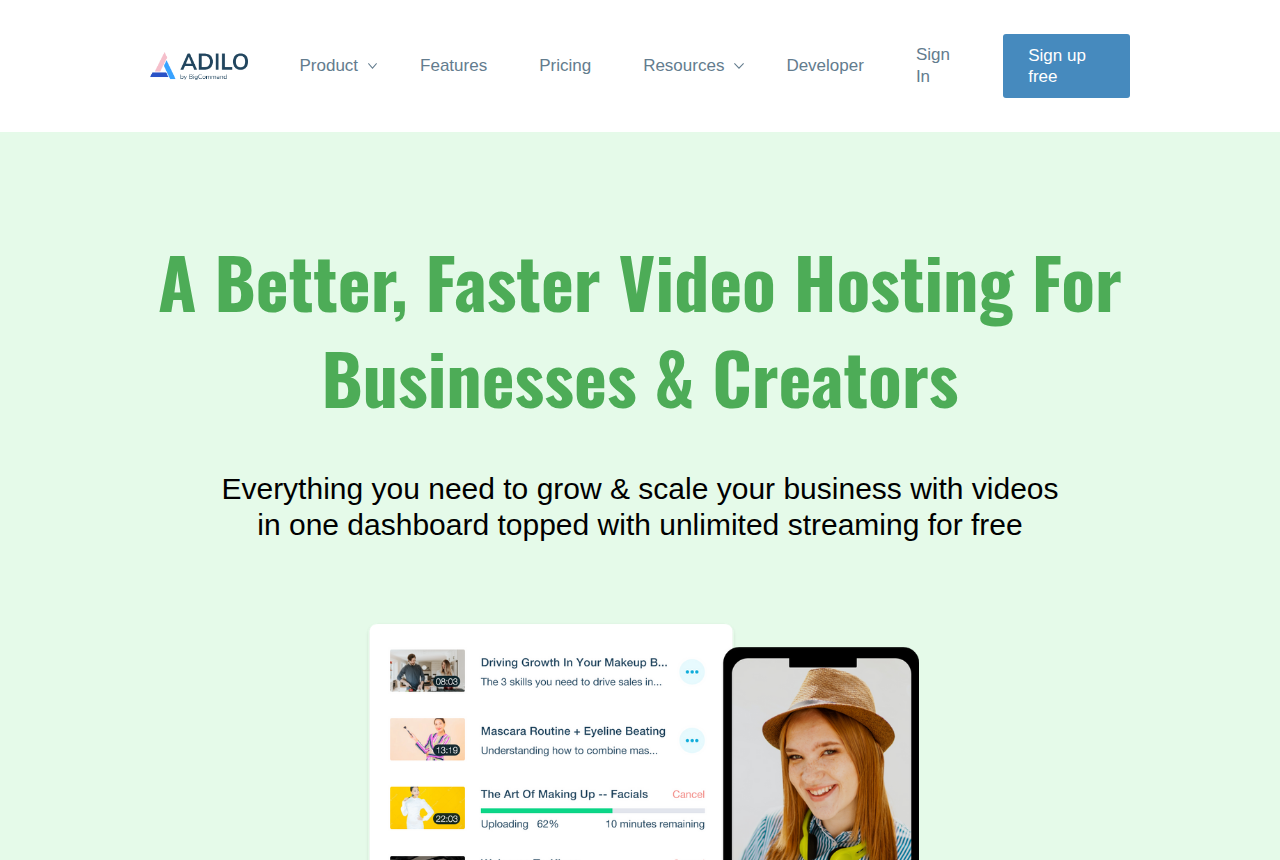
Adilo's split-testing page asks you to name the goal: a higher play rate, deeper engagement, a longer watch, more email captures, or more link clicks. The features page says you compare two videos, or two thumbnails, and see which one converts more.
A Capterra review calls the platform "very buggy". One Trustpilot reviewer wrote that they "contacted customer support more than 25 times to fix some bugs or server issues over more than a year of use." If a server problem hits during the test, one version can stop playing, and the result can belong to the file that stayed online. The Adilo review covers the rest of the host.
Two versions you publish yourself
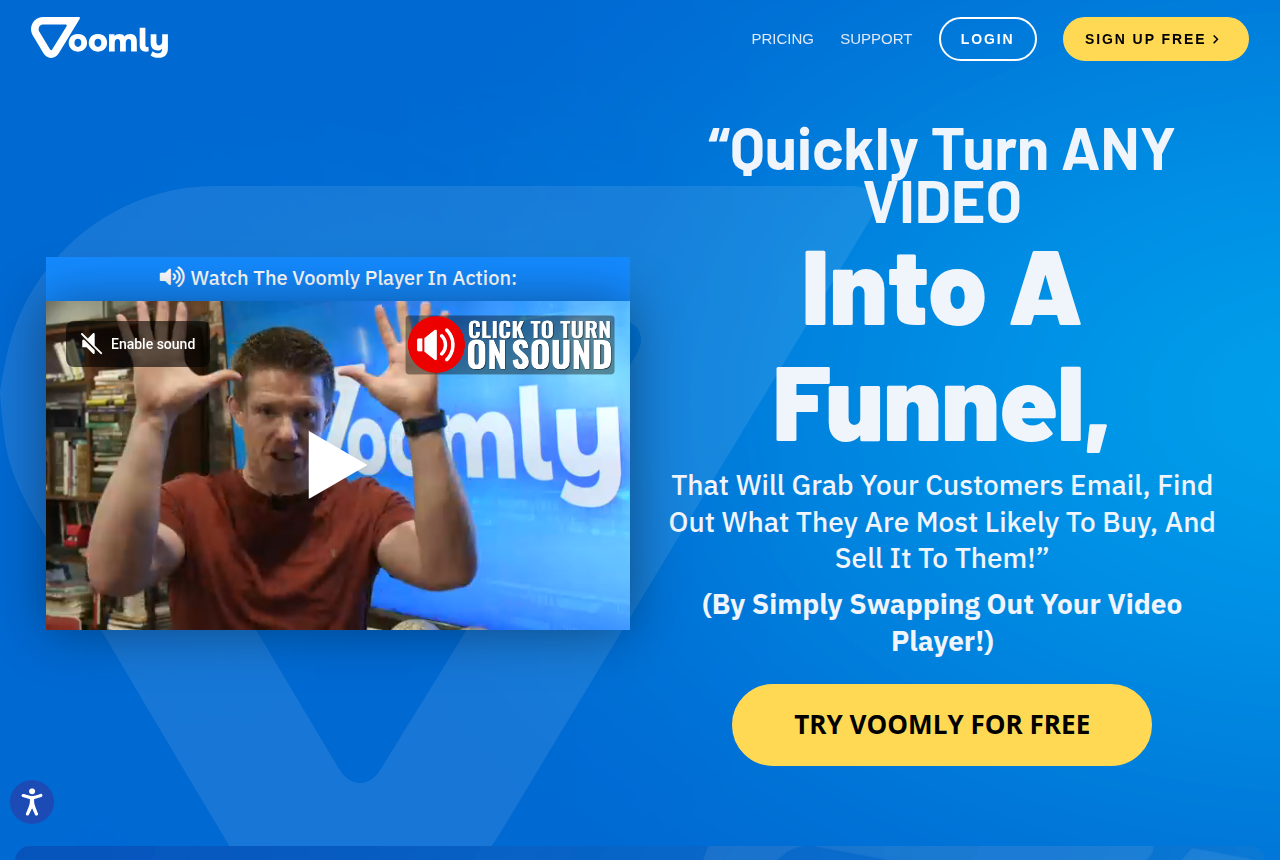
Voomly's analytics article says to create Version A and Version B and let the analytics show which performs better. You publish both, then compare them. Cold traffic is yours to assign.
The review linked above covers the player. The cheap hosting guide covers the bandwidth meter that draws people to this suite. TrackPlay vs Voomly is the head-to-head on the player difference.
My take
I'd start with TrackPlay when the cart can post the order back to the variant. I'd put a recorded conversion on Vidalytics, with conversion rate as the one metric. Plays tell you which version was watched. Revenue stays unknown until an order is posted.
That in-player experiment sits on a paid plan, as the help article already says. Every extra version also counts against the play meter or the bandwidth meter. Run your length and your traffic through the calculator before you launch. Adilo's limit, already noted, is uptime while the test runs.
Questions about split testing a sales video
Can I test only the opening?
Do I need a funnel builder to run a video A/B test?
Which of these hosts can score revenue?
Will the test force a new address onto my ads?
Related reading
Sources
- Vidalytics help: split testing a VSL
- Vidalytics: openings in the first 30 to 45 seconds
- TrackPlay: split testing
- TrackPlay features
- Vidalytics help: Experiments
- Vidalytics help: Winner Recommender
- Panda Video: A/B test
- Adilo: video split testing
- Adilo features
- Voomly: compare Version A and Version B
- Capterra: Adilo reviews
- Trustpilot: Adilo
Changes to this page
- 14 October 2026: first published, from each host's split-test pages and from Adilo reviews on Capterra and Trustpilot.

Written by
Mara Vance
Editor
Mara edits the reviews and roundups on VSL Host Report. She checks autoplay, watch time, timed buttons, lead gates and page speed when the visitor is new and the traffic is paid. She also maps what each host really costs, whether it bills per play, per gigabyte or per seat, and rebuilds the monthly bill for a typical VSL funnel. For each piece she reads long-term user reports across forums and review sites, works through the vendor's own docs and pricing, and confirms the numbers before a verdict goes live.
Last checked 2026-10-14
Comments
No comments yet. Questions and your own experience are welcome.
Thank you. Your comment will appear once it has been reviewed.